Angle Seat Valve

Your Leading Angle Seat Valve Supplier


Smart Pneumatic Solutions was established in 2013, specializing in providing high-performance intelligent pneumatic equipment and solutions for the industrial automation sector. We are committed to advancing the intelligent transformation of pneumatic systems through innovative technologies, serving industries including automation, commercial vehicles, medical devices, and the food and beverage sector. After 10 years hard working, Smart Pneumatic Co., Ltd owed 2 factories now, and our products are including pneumatic vibrators, air cylinders, solenoid valves, fittings, and other accessory, and are exported to 98 countries and regions, covering key industrial markets such as North America, Europe, and Southeast Asia.


First 12 Last 1/2

 
Why Choose Us?

Quality control

Our products have obtained ISO 9001:2015 Quality Management System certification along with CE and UL international safety certifications,

Custom service

Supported by a dedicated R&D team of experienced engineers, we deliver tailored solutions to meet your customized requirements.

High quality

Every unit undergoes 200% pressure testing, AI-simulated operational scenario verification, and full lifecycle tracking to ensure zero-defect delivery.

24H online service

Providing end-to-end services from design consultation to post-sales support, with <24-hour response time and a 99.8% customer satisfaction rate.


Types of Angle Seat Valve

Manual angle seat valve

A manual angle seat valve is controlled by turning its handwheel. This is a multi-turn valve, meaning the handwheel must be turned 360° or more to open or close the valve fully. A manual angle seat valve does not have a spring-return because the handwheel controls all movement.


Pneumatic angle seat valve

Actuators for pneumatic angle seat valves have a spring and a piston. Air enters through the air port and pushes the piston up or down, depending on whether the valve is normally open or normally closed.

Piston movement will lift the disc from the valve seat or push the disc towards the valve seat. When air pressure is cut off, the spring returns the piston and the disc to their default positions.

3/2 way pneumatic solenoid valves are commonly used to control the flow of air to and from a spring-loaded pneumatic actuator. 5/2 way pneumatic solenoid valves can control air flow to and from double acting pneumatic actuators.


Electric angle seat valves

An electric actuator for an angle seat valve enables integration into broader process control systems. This capability provides precise positional control, allowing for fine-tuned flow regulation. An integrated position sensor ensures high accuracy and repeatability by providing continuous feedback on the valve's exact location. The system also accommodates optional external sensors to measure parameters such as temperature or pressure, providing valuable data for automated adjustments and proactive system responses.

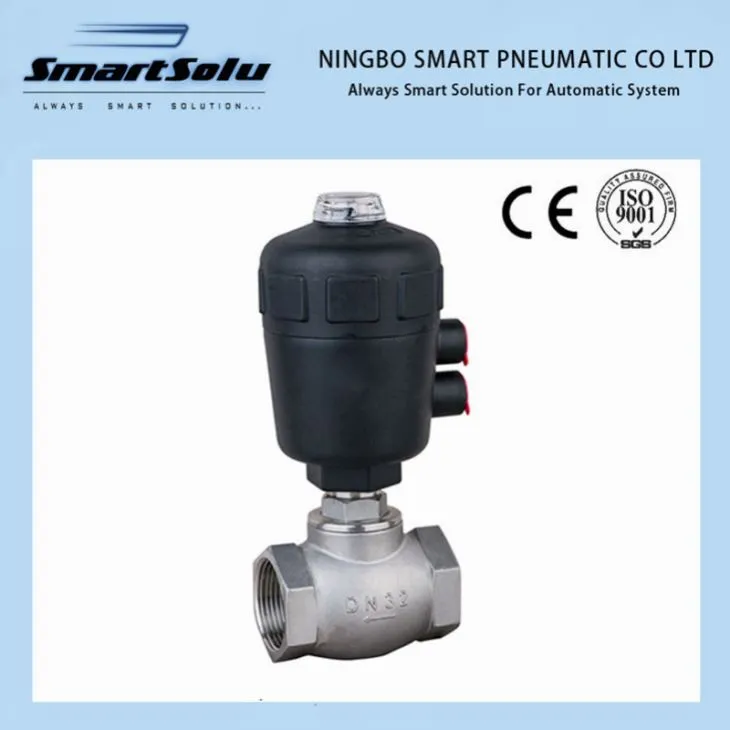
Stainless Steel Waist Drum Angle Seat Valve


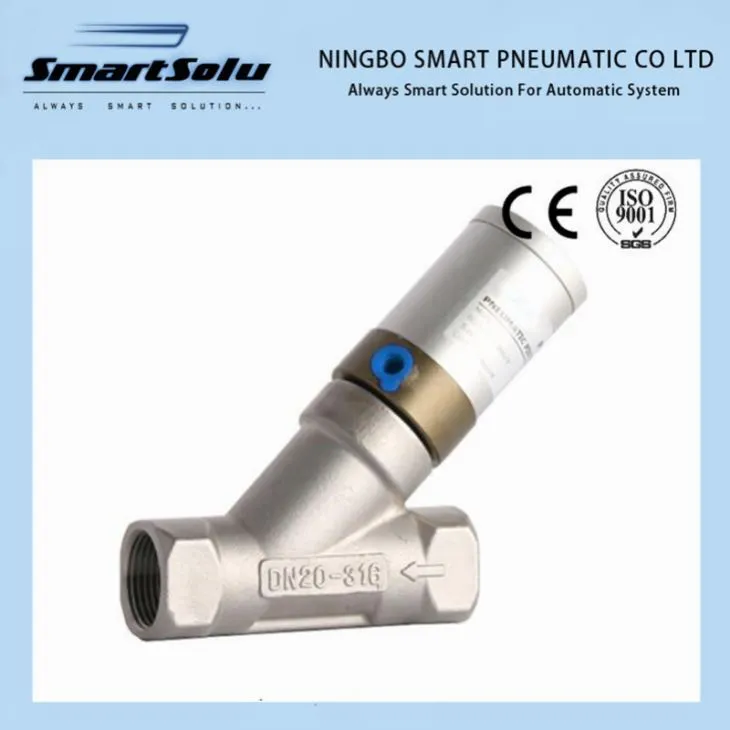
Y-type Compact Air Control Angle Seat Valve


Advantages of Angle Seat Valve

High flow capacity, low pressure loss: Like other valves,angle seat valves offer direct flow paths when open, significantly reducing flow resistance and pressure loss.


Durability and high cycle life: Known for their robust construction and ability to withstand harsh environments, angle seat valves are designed to endure extreme conditions. They are capable of handling high temperatures and high viscosity environments, making them suitable for demanding applications with an expected lifespan of over 10 million cycles.


Versatility: These valves can regulate liquids, gases, steam, and even corrosive fluids, offering great flexibility in various applications.


High-temperature applications: Featuring PTFE seals, angle seat valves can withstand temperatures up to 200°C (392°F), making them ideal for high-temperature environments.


Angle Seat Valve Applications
 

Water treatment and filtration:

Angle seat valves are a crucial component in water treatment and filtration systems, providing precise control over the flow of water and other fluids. They are commonly used in processes such as backwashing, where they facilitate the reversal of flow to clean and regenerate filters. The self-draining feature of angle seat valves is particularly beneficial in water treatment applications, preventing the accumulation of residual water and minimizing the risk of bacterial growth. Their reliable sealing and precise control make them well-suited for applications where maintaining water quality is essential.


Medical equipment:

Angle seat valves find application in various medical equipment where precision control of fluid flow is paramount. They are commonly used in medical devices such as autoclaves, sterilizers, and laboratory equipment. The ability of angle seat valves to provide accurate modulation of flow rates is crucial in processes where maintaining specific conditions, such as pressure and temperature, is critical for the effectiveness of medical procedures.


HVAC (heating, ventilation, and air conditioning):

Angle seat valves are utilized in HVAC systems for controlling the flow of water, glycol, or other liquids used in heating and cooling systems. They play a vital role in applications such as air handling units, where they modulate the flow of chilled or heated water to control the temperature of the air being circulated. The quick response and precise control offered by angle seat valves contribute to the overall efficiency of HVAC systems, ensuring optimal comfort and energy conservation.


Thermoforming machines:

Thermoforming machines, used in the manufacturing of plastic products, require precise control over the flow of compressed air or cooling water. Angle seat valves are employed in these machines to regulate the flow of heating or cooling water/steam, helping maintain precise temperatures during the thermoforming process. Their ability to handle high temperatures and pressures, coupled with quick response times, makes them well-suited for the dynamic requirements of thermoforming applications.


Industrial air dryers:

Angle seat valves play a key role in controlling the flow of air through compressed air systems in industrial air dryers. They are used to modulate the release of compressed air, contributing to the efficiency of the drying process. The reliable sealing capability of angle seat valves is particularly valuable in preventing air leaks, ensuring that the industrial air dryer operates with optimal energy efficiency.


Industrial washing machines:

Angle seat valves are employed in industrial washing machines to regulate the flow of water and detergents during different cycles of the washing process. Their ability to handle a variety of fluids and their self-draining feature make them suitable for applications where cleanliness and hygiene are crucial. The robust design of angle seat valves ensures reliable performance in industrial environments, contributing to the overall efficiency and longevity of industrial washing machines.


Shipping And Payment


productcate-1-1


FAQ

Q: What is an angle seat valve?

A: An angle seat valve uses a 45° seat to create a larger flow path, reducing pressure loss and wear, ideal for steam, high-temp, and viscous media.

Q: How does a pneumatic angle seat valve operate?

A: A pneumatic angle seat valve operates by using air pressure to move a piston, which in turn opens or closes the valve for flow control.

Q: What are the key differences between angle seat valves and ball valves?

A: Angle seat valves are designed for fast pneumatic operation and high cycle life, especially with clean, high-temperature fluids. Ball valves offer minimal pressure drop, versatility across media types and tight shut-off performance.

Q: In which applications are angle seat valves commonly used?

A: Angle seat valves are frequently used in steam systems, CIP systems, water treatment, sterilization equipment and high-cycle pneumatic processes.

Q: Can angle seat valves and ball valves be used interchangeably?

A: In some cases, yes — but the decision depends on the fluid’s characteristics, system pressure, temperature and flow requirements.

Q: When should I use a ball valve instead of an angle seat valve?

A: Use a ball valve instead of an angle seat valve when you need lower pressure loss, greater particulate tolerance, flexible actuation options or a more versatile shut-off solution.

We're known as one of the most professional angle seat valve manufacturers and suppliers in China. Our factory offers customized angle seat valve made in China with low price. Welcome to place an order.

(0/10)

clearall