Definition, classification and basic principle of solenoid valve
Feb 10, 2022
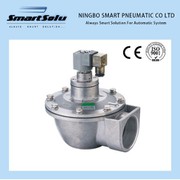
Solenoid valves are the basic components of automation technology used to manipulate liquids, and belong to electric actuators; they are not limited to hydraulic machines, but also pneumatic. The solenoid valve is used to control the fluidity of the hydraulic press. The equipment and devices of the processing plant are generally controlled by the hydraulic press, so the solenoid valve is used.
Principle: There is a closed cavity in the solenoid valve. There are buried holes in different parts. Each hole leads to a different oil pipeline. The center of the cavity is the valve, and the two sides are two solenoid coils. Where the inductance plug-in oil circuit board will be moved, according to the movement of the control oil circuit board, different oil leakage holes will be blocked or leaked out, and the oil inlet port is open and closed, and the gear oil will enter. To a different oil discharge pipe, and then according to the working pressure of the oil to promote the piston rod of the oil, the fire plug pushes the hydraulic cylinder, and the piston rod pushes the mechanical equipment to move. In that way, the molecular thermal motion is manipulated according to the amount of current that manipulates the electromagnetic coil.
Solenoid valves from all over the world are divided into three categories from the basic principle (ie: straight-moving type, staged straight-moving type, dominant type), and from the difference in the structure and raw materials of the piston valve and the difference in the basic principle, it is divided into six. Each branch sub-item (swash plate impulse damper structure, staged heavy film structure, main pipe structure, swash plate piston rod structure, staged swash plate piston rod structure, dominant piston rod structure).