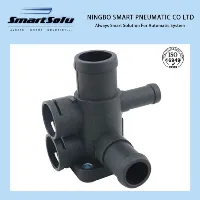
Applicable to solve the problem of directional valve
Jul 08, 2021
Directional valve failure
The faults of the directional valve are: the valve can't change direction or the directional action is slow, the gas leaks, the electromagnetic pilot valve has faults, etc.
(1) The valve can not change direction or change direction slowly, generally due to poor lubrication, spring stuck or damaged, oil or impurities stuck sliding part and other reasons. In this regard, we should first check whether the oil atomizer works normally; Whether the viscosity of lubricating oil is appropriate. If necessary, replace the lubricating oil, clean the sliding part of the directional valve, or replace the spring and directional valve.
(2) After a long time of use, the valve core seal ring is easy to be worn and the valve stem and seat are damaged, which leads to the gas leakage in the valve, the slow action of the valve or the failure of normal reversing. At this time, the sealing ring, valve stem and valve seat should be replaced, or the change-over valve should be renewed.
(3) If the inlet and exhaust holes of the solenoid pilot valve are blocked by oil sludge and other impurities, the sealing is not tight, the movable iron core is stuck, and the circuit is faulty, the reversing valve can not change direction normally. For the first three cases, the oil sludge and impurities on the pilot valve and movable iron core should be cleaned. The circuit fault is generally divided into control circuit fault and electromagnetic coil fault. Before checking the circuit fault, turn the manual knob of the directional valve a few times to see whether the directional valve can change direction normally under the rated air pressure. If it can change direction normally, there is a fault in the circuit. During the inspection, the voltage of the electromagnetic coil can be measured by the instrument to see if it reaches the rated voltage. If the voltage is too low, the power supply in the control circuit and the associated travel switch circuit should be further checked. If the reversing valve can not change direction normally under the rated voltage, check whether the connector (plug) of the solenoid coil is loose or not. The method is to pull out the plug and measure the resistance of the coil. If the resistance is too large or too small, the electromagnetic coil is damaged and should be replaced.