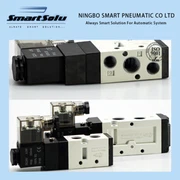
Classification of explosion proof solenoid valve
May 10, 2021
Classification of explosion proof solenoid valve
1. Solenoid valves are divided into three categories in principle:
1) Direct acting solenoid valve:
Principle: when electrified, the electromagnetic coil generates electromagnetic force to lift the closing part from the valve seat and open the valve; When the power is cut off, the electromagnetic force disappears, the spring presses the closing part on the valve seat, and the valve closes.
Features: in vacuum, negative pressure, zero pressure can work normally, but the diameter is generally not more than 25 mm.
2) Distributed direct acting solenoid valve:
Principle: it is a combination of direct acting and pilot type. When there is no pressure difference between the inlet and outlet, the electromagnetic force will lift the small pilot valve and the main valve closing parts up one by one and open the valve. When the pressure difference between the inlet and outlet reaches the starting pressure, the electromagnetic force will pilot the small valve, the pressure in the lower chamber of the main valve will rise, and the pressure in the upper chamber will drop, so as to use the pressure difference to push the main valve upward; When the power is cut off, the pilot valve uses spring force or medium pressure to push the closing part and move downward to close the valve.
Features: it can be operated under zero pressure difference, vacuum and high pressure, but the power is large, so it must be installed horizontally.
3) Pilot operated solenoid valve:
Principle: when the power is on, the electromagnetic force opens the pilot hole, and the pressure of the upper chamber drops rapidly, forming a high and low pressure difference around the closing part. The fluid pressure pushes the closing part upward, and the valve opens; When the power is cut off, the spring force closes the pilot hole, the inlet pressure rapidly forms a pressure difference between the lower and the higher around the valve closing part through the bypass hole, and the fluid pressure pushes the valve closing part downward to close the valve.
Features: the upper limit of fluid pressure range is high, which can be installed at will (need to be customized), but must meet the conditions of fluid pressure difference.
2. Solenoid valves can be divided into six sub categories according to the difference of valve structure, material and principle
Direct acting diaphragm structure, step-by-step heavy plate structure, pilot membrane structure, direct acting piston structure, step-by-step direct acting piston structure, pilot piston structure.