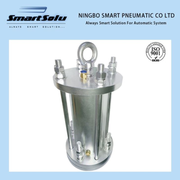
The difference between high temperature claw cylinder and ordinary claw cylinder?
Oct 14, 2019
Causes of high temperature claw cylinder failure, common cylinder failure:
For the disassembly and inspection of the failed cylinders, it is found that the failure of most cylinders is mainly the failure of sealing rings, gluing or lip wear. It is judged that the high working temperature causes the seal ring to fail.
The difference between high temperature claw cylinder and ordinary cylinder:
Ⅰ. Sealing ring selection.
After choosing the right sealing ring, the working life of the cylinder is improved and the effect is obvious. According to the characteristics of the sealing ring and the applicable temperature, the following contents are arranged:
Nitrile butadiene rubber: wear-resistant, heat-resistant, wear-resistant, corrosion-resistant, applicable temperature: - 30-100 C, widely used in hydraulic and pneumatic systems of dynamic and static seals.
Fluorine rubber: high temperature resistance, oil resistance, vacuum resistance, excellent performance of various chemicals; poor low temperature characteristics, large compression permanent deformation, and high price, low mechanical strength, poor process. Applicable temperature: - 30 - 200 C, suitable for high temperature and special media sealing.
Ⅱ. Selection of lubricating oil:
The lubricating oil of ordinary cylinder will soften automatically at high temperature, which results in the cylinder not running normally. Therefore, the high temperature resistant cylinder usually chooses the high temperature resistant lubricating oil to maintain the solid state of lubricating oil under high temperature environment, reduce friction and prolong the service life of the cylinder.
High temperature finger cylinder applicable environment: Unlike ordinary finger cylinder, high temperature claw cylinder can be used in high temperature environment of heating furnace related equipment, electrolyzer related equipment, chemical industry and other related fields.