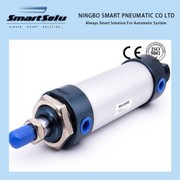
Working principle and classification of shuttle valve
Dec 27, 2019
Shuttle valve is a straight stroke valve, which is a valve body and actuator combined into one. The utility model has the advantages of small volume and convenient installation. The working principle of all shuttle valves is about the same.

Shuttle valve is the combination of cut-off element and cut-off element. The valve core is also the piston of the actuator, without any external moving element, simple and reliable, and can be installed in any direction.
Shuttle valve has excellent sealing performance.
Because the medium pressure is released on the valve seat, the movement of the piston shaft is hardly disturbed by the medium resistance, so the valve can be opened or closed quickly. The improved inner structure of the valve makes the medium flow state better and the pressure loss smaller.
Compressed air, no lubrication required. Use dry air at - 20 ° C to 0 ° C. When there is lubrication, the lubricant must be suitable for the seal.
Air supply: double acting 3 bar to 8 bar. Single acting 4,2 bar to 8 bar.
Working pressure: 10 bar. Operating temperature: - 20 ° C to + 80 ° C
Typical applications: gas technology, oxygen, nitrogen machine, vacuum application, sanitary ware industry, refrigeration.
Shuttle valve is divided into valve and valve.
Close the valve: when the "a" hole enters the air ("B" hole exhausts), the piston moves toward the "d" port and presses on the seat seal, at this time, the valve is closed.
The single acting normally closed spring is installed in the "a" end chamber. When not under control, the piston is pressed against the valve seat, so the most commonly used position is the closed position.
Valve opening
When the "B" hole intake air ("a" hole exhaust), the piston shaft moves from the valve seat to the "C" port direction and stops at the end of the stroke, the valve opens.
The single acting normally closed spring is installed in the "B" chamber. When it is not controlled, the piston shaft leaves the valve seat, so the most commonly used is the open position.
Valve opening
When the "B" hole intake air ("a" hole exhaust), the piston shaft moves from the valve seat to the "C" port direction and stops at the end of the stroke, the valve opens.
The single acting normally closed spring is installed in the "B" chamber. When it is not controlled, the piston shaft leaves the valve seat, so the most commonly used is the open position.