Application and Structural Characteristics of Pneumatic Ball Valve
Sep 20, 2019
Pneumatic ball valves are widely used in the fields of natural gas, oil products, chemical industry, metallurgy, paper-making, power, mining, printing and dyeing, biopharmaceuticals, daily chemical industry, food and beverage, water treatment and air treatment. They are used in conjunction with the active pneumatic appearance.
The structure characteristics of pneumatic ball valve are as follows:
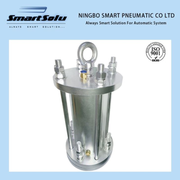
Pneumatic actuator: A new series of GT AT type pneumatic actuators are selected, which have double effect and single effect (spring reset), rack and pinion drive, safe and reliable; large caliber valves are selected series AW type pneumatic actuator fork pull-out drive, with reasonable structure, large output torque, double effect and single effect (spring reset); Examine the sample of pneumatic actuator of our company.
Shell structure: The body of fixed ball valve can be programmed as casting structure, forging structure and full welding structure according to user's requirements and practical working conditions. The ball valve with full welding structure is mainly suitable for buried application.
Common pneumatic valve seal structure:
Floating ball valve adopts lip elastic sealing ring structure planning to ensure the reliability of sealing. For low pressure, ultra-low pressure or vacuum, when using ball valve, the seat sealing structure loaded with leaf spring can ensure the long-term and reliable sealing of ball valve. The seat data of medium and high temperature ball valves can be para-polyphenyl or metal.
Fixed ball valves select pre-ball sealing structure, post-ball sealing structure or pre-and post-ball double sealing structure according to the size of pressure, medium properties and sealing requirements. The seat data of medium and high temperature ball valves can be para-polyphenyl or metal.
Blocking and secretion: When the valve is closed, the seat on the upstream and downstream side blocks the liquid, and the sediment in the body cavity can be secreted through the secretion device.
Active relief structure: When the pressure in the side chamber increases abnormally, the medium in the middle chamber can relieve the pressure on its own thrust to propel the valve seat, thus ensuring the safety of valve lift.
Reliable Sealing of Stem: Stem adopts downloading structure with reverse seal. The sealing force of reverse seal increases with the increase of medium pressure, so it can ensure the reliable sealing of stem. Moreover, when the stem is abnormally pressurized, the stem will not eject.
Fire protection structure: According to the working condition and user's demand, the ball valve can be planned as a fire protection structure. Fire-resistant planning of ball valves implements API607 and JB/T6899 standards. In case of fire which damages the soft seal ring, the fire-resistant structure of ball valves can prevent many leakage of medium and avoid further expansion of fire.
Anti-static structure: When operating the valve, because of friction between the ball and the valve seat, cattle electrostatic charges will occur and accumulate on the ball. In order to avoid electrostatic sparks, an electrostatic device is installed on the valve to derive the charges accumulated on the ball.
Full-diameter structure and shrinkage structure: In order to satisfy the different needs of users, the company's ball valve products have two series of full-diameter and shrinkage. The inner diameter of the channel and the inner diameter of the pipeline of full-diameter ball valves are common, which is easy to clean, while the weight of the shrinkage series ball valves is relatively light, but the flow resistance is only about 1/7 of the same caliber globe valves, so the application prospect of the shrinkage series ball valves is relatively broad.